小清新
「飢えているのがわからないのか」金正恩の“非常識な指示”に国民は絶望_我的网站

A |
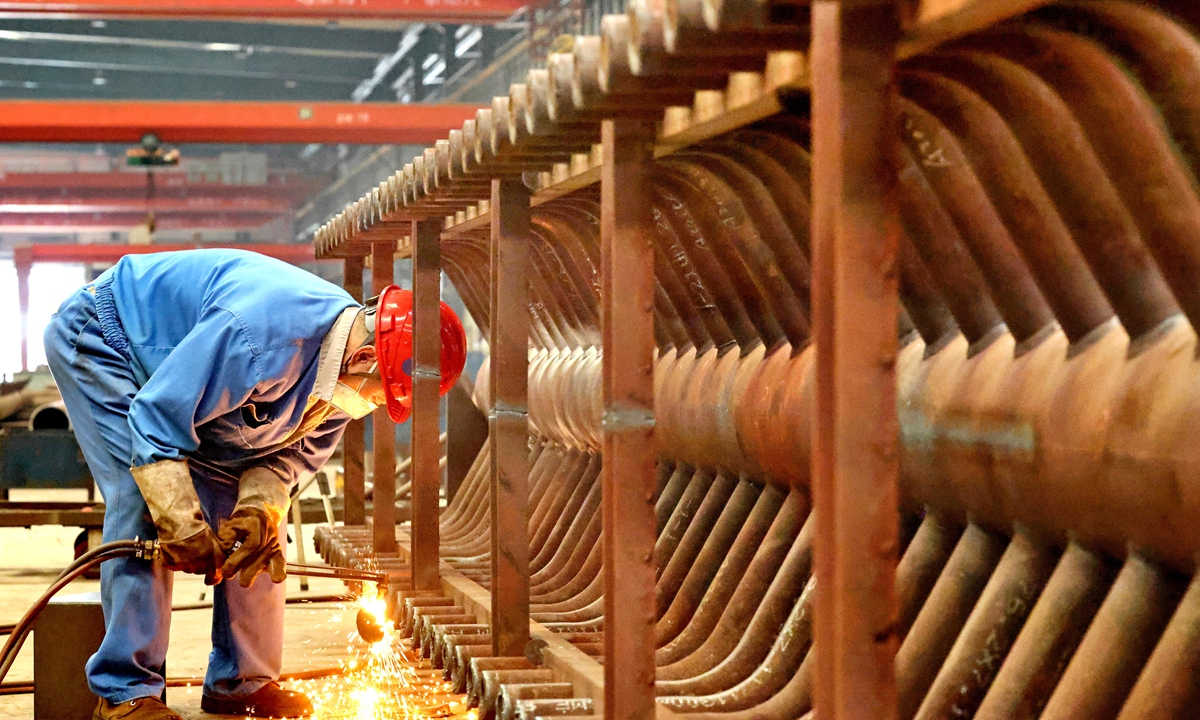
A worker fulfills orders for energy-saving and environmentally friendly boilers destined for export in a manufacturing enterprise in Nantong, East China's Jiangsu Province on August 4, 2026. The enterprise offers products including industrial waste disposal equipment, with sales to more than 30 countries and regions. Photo: CNS PhotoIn recent years, some economies, anxious about their own industrial competitiveness and market position, have politicized economic and trade issues, taking turns to hype false narratives such as "China overcapacity" and a "China Shock 2.0," and using them as pretexts to roll out protectionist measures.
But what are the facts on the ground?
China's Ministry of Commerce recently released a document titled China's Position on the So-Called Excess Capacity Issue. Reviewing the evolution of the global capacity landscape from a historical perspective, it offers an objective analysis of how industrial subsidies, trade surpluses, economic imbalances and market competition relate to "overcapacity," sets out China's policy practices and the direction of its efforts, and puts forward China's ideas and proposals - a forceful response to the "China overcapacity" narrative.
Plainly, the argument that "China's inadequate domestic demand gives rise to excess capacity" rests on a logical sleight of hand - it takes a localized phenomenon at the micro level of the market and applies it wholesale to the structure of the macroeconomy, a picture far removed from reality.
China is not only a major manufacturing power but also a major consuming power. Domestic demand has long been the main engine of the Chinese economy.
To see through the logical fallacy of the "overcapacity" narrative, one must first be clear about where the Chinese economy actually sits in the global landscape.
In the course of economic globalization, China has actively integrated itself into the international division of industrial labor and become the "world's factory" in the truest sense. Chinese manufacturing has enriched the global supply of goods, lowered living costs for consumers in countries around the world, and played an important part in easing global inflationary pressure. But to define China simply as a "producer" on that basis, and from there to conclude that it suffers from "inadequate domestic demand and overcapacity," is a proposition that does not hold water.
From 2013 to 2024, domestic demand contributed an average of 93 percent to China's economic growth, with consumption and investment accounting for an average of 55 percent and 38 percent respectively. China's total retail sales of consumer goods rose from 23.8 trillion yuan ($3.53 trillion) in 2013 to 50.1 trillion yuan in 2025, doubling in size.
Measured at the World Bank's purchasing power parity rates, China's total retail sales of consumer goods in 2025 were 1.7 times those of the US, making the country the world's largest market for consumer goods in all but name. China today ranks first globally in the physical volume of goods consumed, and its per capita annual consumption of some industrial products already approaches the levels seen in developed economies.
China keeps expanding its domestic demand and is working toward a higher-level balance between supply and demand.
Growth in China's total retail sales of consumer goods has slowed somewhat in recent years, and some have taken this as proof of weak domestic demand. That reading is neither objective nor complete.
A strong domestic market provides strategic support for Chinese modernization. The outline of China's 15th Five-Year Plan (2026-30) period devotes a dedicated part to building such a market, stressing the need to adhere to the strategic focus of expanding domestic demand, to expand effective investment, to further implement special actions to boost consumption, to promote the expansion and upgrading of commodity consumption, to unleashing the potential of service consumption, to strengthening the foundation of residents' consumption and to continuously improve the consumption environment - using new demand to guide new supply, and using new supply to create new demand, so as to promote a virtuous cycle between consumption and investment, and between supply and demand, achieve a higher level of dynamic balance between supply and demand.
The slowdown in retail sales growth is consistent with China's shift from high-speed growth to high-quality development, and it also reflects the upgrading of the country's consumption structure. China's consumer market is moving faster from one dominated by goods toward one in which goods and services carry equal weight. Spending on services is growing rapidly and is expected to account for more than half of the total by 2030.
China's super-sized market is not only the bedrock of its own development but also a broad platform on which countries around the world can share in the dividends of that growth.
China has ranked as the world's second-largest importer for 17 consecutive years and is a major export destination for nearly 80 countries and regions. It has granted zero-tariff treatment to 63 countries and regions, becoming the first major economy in the world to extend full zero-tariff coverage to every African country and every least developed country that has diplomatic relations with it. It is also the only country to host an international import expo, having staged eight editions of the China International Import Expo with cumulative intended deals worth more than $580 billion. Over the 14th Five-Year Plan period (2021-25) period, China's cumulative imports topped 90 trillion yuan. These facts and figures show clearly that China is not just the "world's factory" but, still more, the "world's market."
Looking ahead, China's middle-income group is set to exceed 800 million people within little more than a decade, and per capita GDP is expected to reach the level of a moderately developed country. With vast room for consumption and ample potential and vitality, domestic demand will remain the main engine of China's economic development and will keep injecting strong momentum into world economic growth.
This was compiled and translated by the Global Times English edition based on an article published in the "Chisu Jinsheng" economic commentary column of the People's Daily on August 6, 2026. 。 北朝鮮当局が全国のすべての公共機関、工場、企業所の敷地に芝生を造成するよう指示していたことが分かった。深刻な食糧不足に直面する住民の間では「今は芝生どころではない」と強い不満と戸惑いの声が広がっている。

B | ラジオ・フリー・アジア(RFA)が22日、現地情報筋の話として伝えた。

C |
咸鏡北道の住民によると、道党委員会は今月、「芝生植栽」を称揚する金正恩総書記の「偉大性教育資料」を配布し、全国的に芝生づくりを一般化する方針を示した。教材では、金氏が2012年9月、国家運営を論じる中で芝生植栽の重要性を提起したことが強調され、その「試験圃田方式」に基づく具体的な栽培方法まで指示されたという。土地を30~40センチ掘り下げ、土を焼いて細かくしてから芝を植えるという手間のかかる方法だ。
しかし、参加者からは「食糧難の最中に芝生とは何事か」「人が食べられない草を植える余裕はない」と反発の声が相次いだという。
(参考記事:ここまで飢えが…北朝鮮「山奥の洞窟」で起きた衝撃事件)
住民は「工場の空き地や塀の下には、豆やトウモロコシ、ジャガイモなどの作物を植え、従業員で分け合ってきた。昨年は多くの工場がこうした自助努力で飢えをしのいだ」と語る。

D | 芝生造成は、そうした貴重な耕作地を奪いかねないと不満を募らせている。

E |
平安北道の別の住民も「会議の場は一瞬で冷え込んだ。深く土を掘る体力も、土を焼く燃料もない。腹が満たされてこそできる作業だ」と語り、「どの工場や機関でも、わずかな空き地に作物を植えているのが現実だ」と指摘した。
韓国・統一研究院の趙漢範(チョ・ハンボム)上級研究委員は、金正恩政権の政策決定の特徴について「極めて独善的で即興的だ」と分析する。地方発展政策や工業振興策も、党大会の正式決定を経ず、金氏の場当たり的な指示で拡大されてきたという。芝生造成も、留学経験のある金氏が海外の景観を北朝鮮に持ち込もうとする意図が背景にあるとしつつ、「生活実態を無視した指示は、生産性の低下や住民生活へのさらなる負担を招くだけだ」と批判した。

F |
住民の間では「当局は『人民第一主義』を掲げながら、肝心の食糧問題を顧みない」と失望が広がっており、現場との深刻な乖離が浮き彫りとなっている。
Current article:http://1qu.wengsengzhanhuangu.cyou/news/20260826_589.html
Published on:08:16:08